

 06-Feb--2026
Disposable face shields are widely used across healthcare, laboratory, food processing, and industrial environments. While they may appear similar at first glance, face shields can differ significantly in material, design, comfort, and intended use. Choosing the right disposable face shield for a specific application is essential for ensuring effective protection, wearer comfort, and operational efficiency.
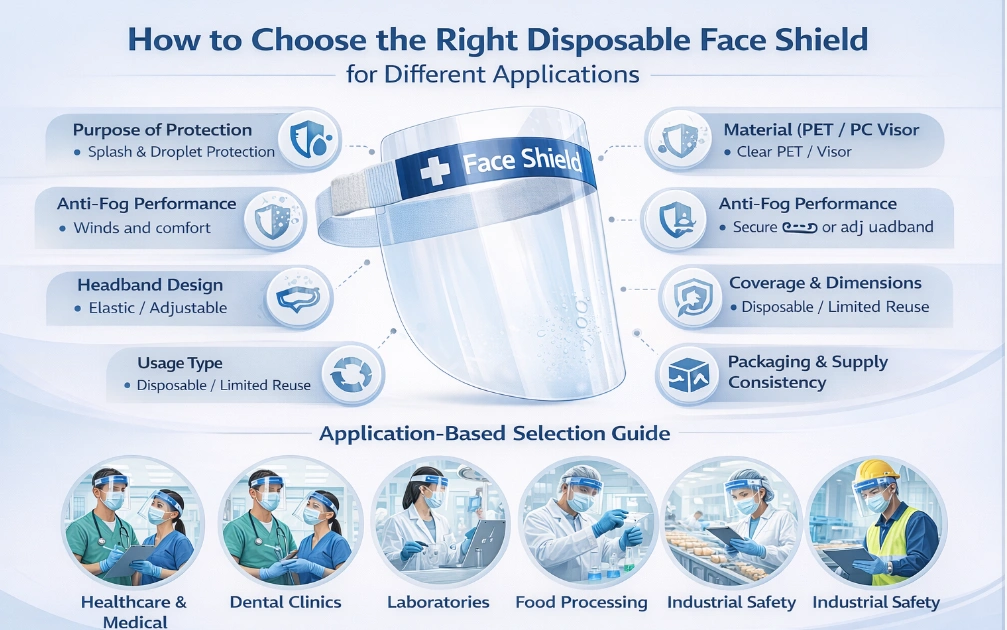
This guide outlines the key factors to consider when selecting disposable face shields for different professional applications in 2026.
1. Understand the Primary Purpose of Protection
The first step in selecting a disposable face shield is identifying the main type of exposure risk. Face shields are designed to protect against splashes, droplets, and direct contact, rather than airborne particles.
Typical protection needs include:
Fluid and droplet splashes
Eye and facial exposure during close-contact procedures
Chemical or liquid splashes in controlled environments
If airborne particle filtration is required, a face shield should be used together with a medical mask or respirator rather than as a standalone solution.
2. Choose the Right Visor Material
The visor material directly affects clarity, durability, and comfort.
PET (Polyethylene Terephthalate):
Lightweight, cost-effective, and commonly used in disposable face shields. Suitable for medical, dental, and food processing environments.
PC (Polycarbonate):
Higher impact resistance and durability. Often preferred in laboratory or industrial applications where additional mechanical protection is needed.
Clear, distortion-free visibility is critical, especially in precision-based tasks such as medical procedures or laboratory work.
3. Consider Anti-Fog Performance
Fogging can significantly reduce visibility and compromise safety. Anti-fog treatment has become a key requirement in many professional settings, particularly where face shields are worn together with masks.
For environments involving:
Extended wear
Temperature changes
High humidity
An anti-fog coated visor is strongly recommended.
4. Evaluate Comfort and Wearability
Comfort is no longer a secondary concern. In many applications, face shields are worn for extended periods, making ergonomic design essential.
Key comfort features include:
Soft foam forehead padding
Lightweight overall construction
Breathable materials in head contact areas
Balanced pressure distribution
Uncomfortable face shields are more likely to be adjusted or removed, reducing their protective effectiveness.
5. Select the Appropriate Headband Design
Headband design affects stability and fit during use.
Common options include:
Elastic headbands: Simple, lightweight, and suitable for short-term or general use
Adjustable straps: Provide a more secure and customized fit, often preferred in medical or laboratory settings
The face shield should remain stable during movement without causing excessive pressure.
6. Coverage and Shield Dimensions Matter
Proper coverage ensures effective protection.
A well-designed disposable face shield should:
Cover the full width of the face
Extend below the chin
Wrap slightly around the sides
Insufficient coverage may leave parts of the face exposed to splashes or droplets.
7. Application-Based Selection Guide
Healthcare & Medical Use
PET or PC visor with high clarity
Anti-fog coating
Soft foam padding
Secure elastic or adjustable headband
Dental Clinics
High transparency visor
Anti-fog performance
Lightweight design for close-contact procedures
Laboratories
PC visor for increased durability
Chemical splash resistance
Secure and stable headband
Food Processing & Hygiene Control
PET visor
Lightweight and disposable
Designed to prevent contamination
Industrial & Occupational Safety
Impact-resistant visor material
Wider coverage area
Compatibility with other PPE
8. Disposable vs. Limited Reuse Considerations
While disposable face shields are typically designed for single use, some applications allow limited reuse under controlled conditions. Buyers should clearly define usage expectations and hygiene requirements before selecting a product.
Disposable options are generally preferred where:
Cross-contamination risk is high
Cleaning and disinfection are impractical
High turnover of personnel or visitors is expected
9. Packaging, Documentation, and Supply Consistency
For importers and distributors, product selection goes beyond physical design.
Key considerations include:
Clear product specifications
Consistent quality across batches
Appropriate packaging for storage and transport
Reliable supply capacity and lead times
These factors are critical for long-term sourcing partnerships.
Conclusion
Choosing the right disposable face shield requires a clear understanding of application requirements, protection needs, and user comfort. By evaluating material, design, coverage, and intended use, buyers can select face shields that provide effective protection while supporting operational efficiency.
In 2026, informed selection of disposable face shields is not only a matter of safety, but also a key component of responsible procurement and professional PPE management.
