

 22-May--2026
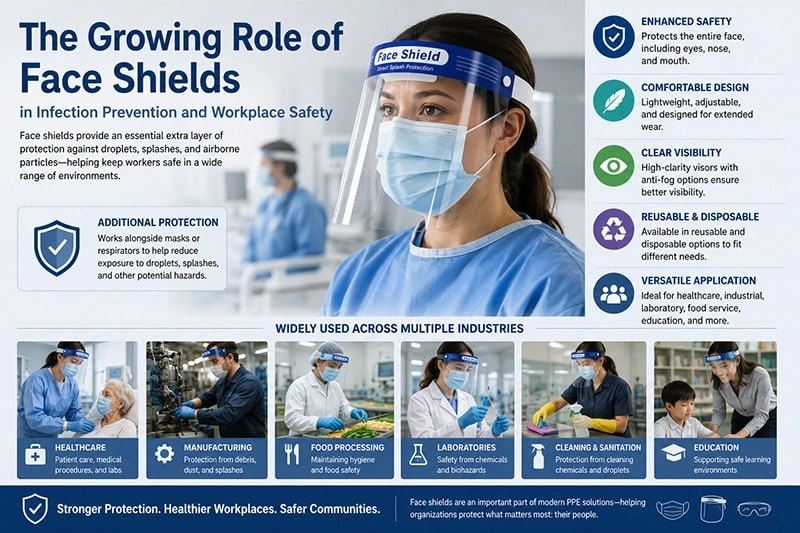
As organizations continue to strengthen health and safety measures, face shields are becoming an increasingly important component of modern personal protective equipment (PPE) programs. While often associated with healthcare settings, face shields are now widely used across industries where protection from droplets, splashes, and airborne debris is essential.
Their growing adoption reflects a broader focus on workplace safety, infection prevention, and employee well-being.
Enhancing Protection in Healthcare Environments
Healthcare facilities remain one of the largest users of protective face shields. Medical professionals frequently wear face shields in combination with surgical masks or respirators to help reduce exposure to bodily fluids, respiratory droplets, and accidental splashes during patient care.
Face shields provide an additional layer of protection for the eyes and facial area, helping healthcare workers maintain safety while performing routine examinations, laboratory testing, and clinical procedures.
Expanding Beyond the Medical Sector
The use of face shields has expanded well beyond hospitals and clinics. Today, they are commonly found in:
● Manufacturing facilities
● Food processing plants
● Laboratories and research centers
● Pharmaceutical production sites
● Cleaning and sanitation operations
● Educational and training environments
In these settings, face shields help protect workers from chemical splashes, flying particles, dust, and other workplace hazards.
Supporting Infection Prevention Strategies
Many organizations now include face shields as part of broader infection-control programs. During periods of increased respiratory illness activity, employers may recommend or provide face shields alongside masks to reduce the risk of droplet exposure in high-contact environments.
Although face shields are not designed to replace masks or respirators, they serve as an effective supplementary barrier that can improve overall protection when used appropriately.
Innovations Improve Comfort and Performance
Manufacturers continue to enhance face shield designs to meet evolving workplace needs. Recent product developments include:
● Anti-fog transparent visors
● Lightweight PET materials
● Extended face coverage
● Adjustable headbands
● Improved optical clarity
● Recyclable and environmentally conscious materials
These improvements help increase wearer comfort while maintaining high levels of protection during extended work shifts.
Meeting Workplace Safety Requirements
Employers across multiple industries are placing greater emphasis on compliance with occupational health and safety regulations. Face shields are increasingly included in PPE assessments and workplace risk-management plans, particularly where splash hazards or face exposure risks are present.
By integrating face shields into safety programs, organizations can better protect employees while supporting regulatory compliance and operational continuity.
Future Outlook
Industry experts expect face shields to remain an important part of workplace safety and infection-prevention strategies in the years ahead. As organizations continue investing in preparedness and employee protection, demand for reliable, comfortable, and high-quality face shields is expected to remain steady.
Rather than being viewed solely as emergency pandemic equipment, face shields are increasingly recognized as a practical and versatile safety solution across healthcare, industrial, and public service environments.
